If your garage door suddenly will not lift, sounds like it weighs a ton, or you spotted a gap in the coiled spring above the door, you are almost certainly dealing with a broken spring. It is the single most common garage door failure we see across Riverside, Moreno Valley, Corona, and the rest of the Inland Empire. The natural next question is simple: what is this going to cost? Below we walk through what actually drives the price, realistic ranges, and the decisions that keep you from spending money twice. Every job is different, so we always quote your specific door before any work begins, and the estimate is free.
What actually drives garage door spring repair cost
There is no single flat price for spring repair, and any company that gives you a firm number over the phone before seeing the door is guessing. The cost comes down to a handful of real factors, and once you understand them you can read any quote with confidence.
- Spring type: torsion springs (mounted on a bar above the door) and extension springs (running along the tracks on each side) are priced differently and take different amounts of labor.
- One spring or two: many doors use a pair of springs. When one breaks, the other is usually the same age and close to failing, which affects the smart way to repair it.
- Cycle rating: springs are rated by how many open and close cycles they are built to last. Higher cycle springs cost more up front but last far longer.
- Door size and weight: a heavy two car or insulated door needs stronger springs than a light single door, and heavier doors take more care to balance.
- Related parts: if cables, bearings, or the center bracket are worn, replacing them at the same time avoids a second service call.
Torsion springs vs extension springs
Knowing which system you have helps the conversation move faster. Both do the same job, counterbalancing the weight of the door so the opener and your hands are not fighting the full load, but they are built differently.
Torsion springs
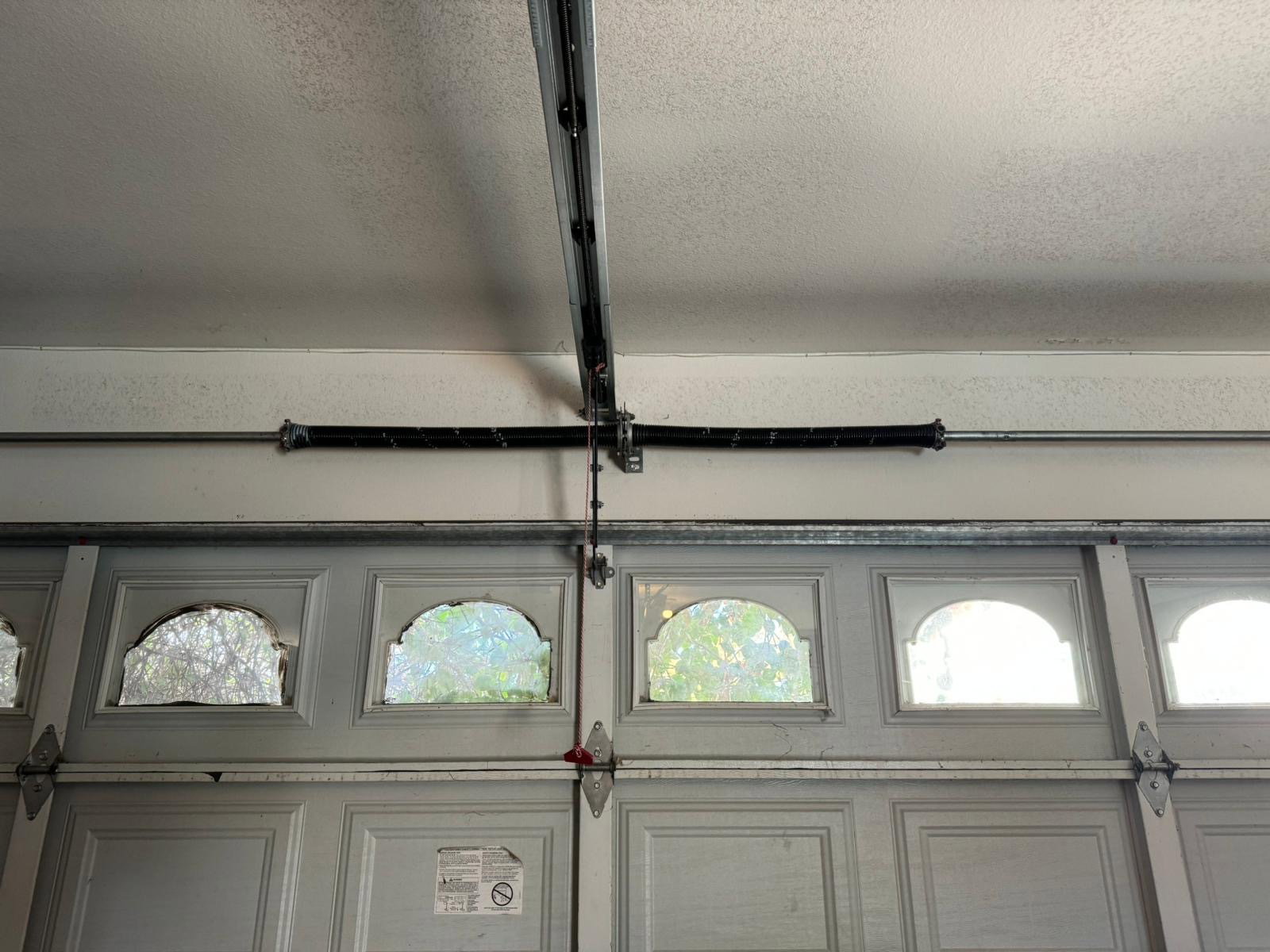
Torsion springs sit on a metal shaft above the door opening and wind up to store energy. They are the more common choice on modern doors, run more smoothly, and tend to last longer. Because they are under high tension and require special winding bars and technique to adjust safely, they are not a do it yourself part. Torsion systems generally cost a bit more than extension systems, but the longer life and smoother operation are worth it for most homeowners.
Extension springs
Extension springs stretch and contract along the horizontal tracks on either side of the door. They are common on older and lighter doors and are usually a little less expensive. They should always be paired with safety cables that contain the spring if it breaks, which is an important safety detail an experienced tech will check.
Garage door springs hold enough stored energy to cause serious injury. This is one repair we strongly recommend leaving to a trained tech with the right tools. If a spring just broke, do not force the door open with the opener, you can damage the motor or knock the door off track. Call or text us at (909) 264-7415 and we will take it from there.
Why correct spring sizing matters so much
This is the part most cost articles skip, and it is the most important. A garage door spring has to be matched to the exact weight and height of your door. Springs are specified by wire size, inside diameter, and length, and the right combination is what creates a door that floats up easily and stays put halfway. The wrong spring is the number one reason people end up paying for the same repair twice.
An undersized spring struggles to lift the door, strains the opener, and wears out early. An oversized spring slams the door upward and makes it hard to keep closed. When the door is balanced correctly, you should be able to lift it by hand with little effort and have it hold its position when stopped partway. That balance is what protects the opener and gives the new spring its full lifespan, which is exactly why a careful measurement matters more than the lowest sticker price.
Realistic cost ranges and what affects them
We will be honest rather than throw out a number that may not match your door. Spring repair is one of the more affordable garage door repairs, and the final figure depends on the factors above. A standard single spring on a light door sits at the lower end. A pair of high cycle torsion springs on a heavy insulated two car door sits higher, because you are getting more hardware and longer life. Here is how to think about it:
- Single vs double spring jobs: replacing two springs costs more than one, but on a two spring door it is usually the better value because both are the same age.
- Standard vs high cycle springs: upgrading to a higher cycle spring raises the price modestly and can dramatically extend how long it lasts, especially on doors used many times a day.
- Added parts: worn cables, bearings, or rollers add to the total but save you a separate trip charge later.
- Access and condition: rust, older hardware, or a door that is also off track can add labor.
The most reliable number is the one tied to your actual door. We give a clear, itemized quote before we start, you approve it, and there are no surprises after. The estimate itself is always free.
Should you replace one spring or both?
If your door uses two springs and one breaks, you will often be advised to replace both. That is not an upsell, it is sound practice. The springs were installed at the same time and have gone through the same number of cycles, so the second one is usually close behind. Replacing both keeps the door balanced and saves you a second service call within months, which almost always costs more than doing both at once. On a single spring door, you simply replace the one spring with a correctly sized unit.
Repair vs replace: when a new door makes more sense
For the large majority of homes, replacing the spring is the right call. The door itself is fine and only the worn part needs attention. There are a few situations where it is worth at least discussing a new door instead:
- Multiple failing systems: if the springs, cables, rollers, and panels are all worn out on an old door, the repairs can start to add up.
- Damaged or dented panels: if the door is also bent or rusted through, you may prefer to put the money toward a replacement.
- You were already planning an upgrade: if you want a quieter, insulated, or better looking door anyway, a broken spring can be the nudge to do it now.
An honest tech will tell you when a simple spring replacement is all you need, rather than steering you toward a sale. If you are weighing the bigger picture, our guide on what to know before replacing a garage door or opener lays out the trade offs, and if the door also slipped off its rollers our guide to why a garage door will not close covers related symptoms.
How to get an accurate quote
The fastest way to a real number is to let us see the door. A quick phone or text description helps, and a photo of the broken spring and the door is even better. From there we can confirm the spring type, estimate the size, and give you a clear price range, then verify it on site before any work starts. We answer 24/7, we carry common spring sizes, and most spring repairs are completed in a single visit. When you are ready to move forward, our garage door spring repair and replacement team handles the whole job, correctly sized and balanced, with a free estimate first. For ongoing peace of mind, regular garage door maintenance catches a weakening spring before it strands your car in the garage.