
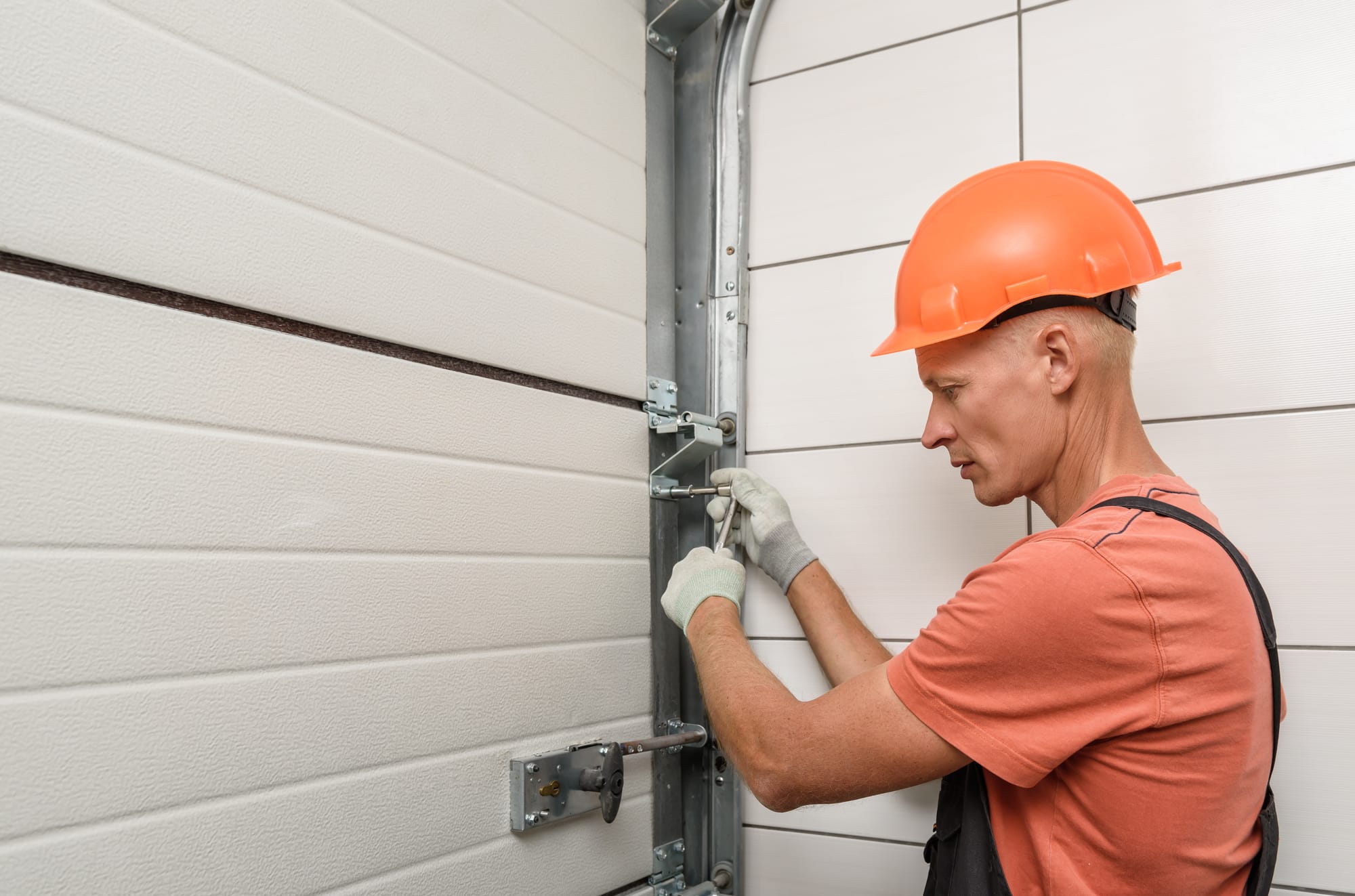
Replacing a garage door or opener affects your daily convenience, your security, your home's curb appeal, the noise level inside the house, and even your energy use. Because the door is the largest moving thing in most homes, getting the decision right matters. This guide puts the most important choices first, then adds deeper detail so you can plan with confidence and compare quotes fairly. Throughout, remember one rule above all others: the door and opener work as one balanced system, and the springs, not the motor, carry the weight.
1. Safety and compatibility come first
The single most important thing to understand is that the garage door is a balanced unit. The springs carry most of the door's weight, and the opener's job is to guide the movement, not to haul a dead weight door up and down. If the door is too heavy, sprung incorrectly, or out of balance, even a powerful opener will struggle, wear out early, and can become unsafe.
Before you replace anything, confirm the door's size, construction, and approximate weight, then make sure the torsion or extension spring setup is designed for that exact door. If you replace the door, you are changing its weight, which often calls for new springs, cables, drums, and sometimes bearings. If you replace only the opener, you still need a balance test to confirm the door can be lifted smoothly by hand and stays at mid height without drifting.
- Balance test: with the door closed, disconnect the opener and lift the door by hand. It should move smoothly and stay near mid travel with little drift.
- Spring match: springs must be sized for the new door's weight and height, not reused automatically from the old door.
- Opener match: choose the opener drive and power based on door type, height, and usage, not marketing numbers alone.
- Safety sensors: photo eyes are required, and they must be installed at the correct height and tested after installation.
2. Know your replacement goal
People replace doors and openers for very different reasons, and your goal should drive the product choice. If security is the priority, focus on robust locking features, modern rolling code remotes, secure wall controls, and reinforced construction. If quiet operation matters, prioritize a belt drive or wall mount opener, nylon rollers, proper track alignment, and insulated panels that reduce vibration. If energy efficiency is the point, insulation and air sealing are the keys. If curb appeal is the goal, panel design, color, windows, and hardware style matter most.
Write down what you want to improve and rank your top three outcomes. This simple step prevents the two most common mistakes: paying for features that do not solve your main problem, and under buying in the one area you will notice every single day.
- Security first: reinforced door, tamper resistant brackets, rolling code remote, smart alerts, and a discreet keypad.
- Quiet first: belt drive or wall mount opener, soft start and stop, quality rollers, and proper spring balance.
- Comfort first: insulated door, good bottom seal, perimeter weatherstrip, and an insulated entry door into the home.
- Appearance first: modern panel style, windows, decorative hardware, color matched trim, and a clean track layout.
3. Measure correctly before you buy
Many replacement problems start with incorrect measurements. A quote based only on width and height can miss the constraints that decide which hardware and opener will actually fit. Headroom is the space between the top of the opening and the ceiling. Backroom is the depth from the opening to the back wall. Sideroom is the space on each side of the opening. Together these decide whether you can use standard tracks, need a low headroom kit, or should consider a wall mount opener.
Ceiling type matters too. A high ceiling can allow a wall mount jackshaft opener paired with torsion springs, while a low ceiling may require a low headroom track configuration. Obstructions such as ducts, beams, lighting, or storage racks can force adjustments or add labor. Getting these numbers right up front prevents delays, surprise charges, and compromised performance.
- Width and height: measure the rough opening, then confirm the door size you select matches it.
- Headroom: standard setups often need several inches of clearance, and low headroom kits can reduce what is needed.
- Backroom: required for the horizontal tracks plus the opener rail length, especially on 8 foot doors.
- Sideroom: required for the track, springs, and bearing plates.
- Obstructions: note ceiling drops, beams, pipes, and storage that could interfere with the rails or tracks.
4. Choose insulation and construction for your climate and use
Insulation is not only about keeping the garage warm. Insulated doors are usually quieter, more rigid, and far more resistant to dents than thin single layer doors. The right choice depends on whether the garage is attached, whether there is living space above it, and whether you use the space as a workshop or gym. With an attached garage, improving the door's insulation and air sealing can noticeably reduce drafts and temperature swings in the rooms next door.
Door construction generally falls into three categories. Single layer steel is budget oriented but can be noisy and easy to dent. Double layer steel with insulation is a common balance of cost, performance, and strength. Triple layer doors add an interior steel skin for the highest rigidity, the best noise reduction, and a more finished interior look. Insulation is often compared by R value, but pay attention to overall build quality, thermal breaks, and sealing too. A well sealed door with a good bottom seal and perimeter weatherstrip can outperform a door with a slightly higher R value but poor sealing.
- Single layer: lowest cost, lowest dent resistance, more noise and vibration.
- Double layer insulated: better comfort, quieter, improved strength, and good value for most homes.
- Triple layer: the most rigid and quiet, a premium feel, and the best choice for frequent use.
- Air sealing: the bottom seal and the side and top weatherstrips matter as much as the insulation itself.
5. Opener type matters more than horsepower
Most buyers focus on horsepower, but the opener's design and the installation quality matter more. The main residential types are chain drive, belt drive, screw drive, and the wall mount jackshaft. Chain drives are durable and cost effective but tend to be louder. Belt drives are usually quieter and a top choice for attached garages. Screw drives can be fast and simple but may be more sensitive to temperature and maintenance depending on the model. Wall mount openers mount beside the door on the torsion shaft, freeing up ceiling space and reducing vibration through the structure.
Also think about duty cycle. If your household uses the garage as the main entrance, with dozens of cycles per day, invest in a higher quality opener with a better motor, soft start and stop, and a strong warranty. If you have a tall door, such as an 8 foot door, make sure the opener and rail are configured for that height or include the proper extension kit.
- Chain drive: strong and economical, usually the loudest option.
- Belt drive: quiet and smooth, ideal for attached garages.
- Screw drive: fewer moving parts, can be louder than a belt, and model dependent.
- Wall mount: saves ceiling space, great for high lift or overhead storage, and requires a torsion spring setup.
- Soft start and stop: reduces jerk, noise, and wear on the door hardware.
6. Replace the critical hardware when needed
A garage door replacement is not just panels. The hardware system decides how quiet and smooth the door feels and how long it lasts. Springs are the most critical wear item. Rollers can transform the noise level. Cables and bottom brackets handle high tension loads. Bearings, center plates, and hinges all have to match the door's weight and track setup.
Install a new door on worn tracks, or reuse old rollers and hinges, and the door may be louder and less reliable. Install a new opener on a door with tired springs, and the opener takes the abuse and fails early. A good professional assessment identifies what can be safely reused and what should be replaced for a complete, reliable system.
- Springs: correct sizing and cycle rating matter, and higher cycle springs can be worth it for heavy use.
- Rollers: nylon rollers with sealed bearings usually run quieter than standard steel rollers.
- Cables and bottom brackets: replace if frayed, corroded, or mismatched to the door height and drum size.
- Tracks: must be straight, secure, and aligned, and replacement is common when you change door type or height.
- Hinges and struts: reinforcement prevents flexing and extends panel life, especially on wide doors.
Springs and cables store enormous energy and are the leading cause of garage door injuries. Never try to wind, loosen, or replace a spring, cable, or bottom bracket yourself during a project. Let a trained professional handle the high tension hardware. If you have questions while you plan, call or text us any time at (909) 264-7415.
7. Set up modern security and smart features correctly
The garage door is a major entry point, so security features add real value when they are configured properly. Modern openers offer rolling code technology, automatic locking on some models, and smart connectivity that alerts you when the door opens or closes. To get the benefit, update the default settings, enable strong account security in the app, turn on notifications, and confirm your Wi Fi signal reaches the garage.
Also plan for backup access. A battery backup keeps the opener working during a power outage. An exterior keypad gives access without a remote, but it should be placed where it is not obvious from the street. Manual release access matters too. For a garage with no second entry door, consider an emergency release kit that allows access from outside, installed securely and used carefully.
- Rolling code remotes: prevent code grabbing and are standard on most modern units.
- Smart control: remote status, scheduling, and alerts, all of which need reliable Wi Fi.
- Battery backup: important in outage prone areas and helpful for everyday convenience.
- Keypad: convenient when mounted discreetly, with codes changed periodically.
- LED lighting: improves visibility, but check compatibility to avoid remote interference.
8. Budget realistically for the whole project
Pricing varies widely with door size, insulation, design, opener type, and the amount of labor involved. The simplest projects are straightforward swaps where the framing is solid and there are no clearance issues. Costs rise with custom sizes, premium finishes, windows, heavy doors, high lift conversions, new electrical needs, rotten jambs, or structural corrections.
Ask for an itemized estimate. It should spell out the exact door model or construction type, insulation level, track type, spring cycle rating, opener model, accessories, and disposal. Also ask what is excluded, such as framing repairs, an added electrical outlet, or permit fees where they apply. A clear scope reduces surprises and lets you compare quotes on equal terms.
- Door cost drivers: size, insulation, steel gauge, windows, design, color, and wind reinforcement.
- Opener cost drivers: drive type, smart features, battery backup, and wall mount versus rail mount.
- Labor drivers: low headroom, obstructions, track changes, high lift, and the condition of old hardware.
- Possible add ons: new jamb trim, weatherstripping, new rollers, interior trim, and surge protection.
9. Know local code and wind requirements
In many areas, garage doors must meet wind load ratings, and this is not optional where building codes are stricter. A door that is not rated for your location can fail in strong winds, and because the garage door is such a large opening, that failure can cause serious pressure changes that damage the roof or structure.
Wind rated doors may require heavier gauge reinforcement, additional struts, stronger tracks, and specific fasteners into the framing. If you live in an area with code requirements, confirm the door's rating and that the installation method meets those requirements, then keep the documentation for insurance and future resale.
- Wind load rating: choose a door certified for your location's requirements.
- Reinforcement: struts and heavier tracks may be required rather than optional upgrades.
- Fastening method: proper anchors and framing attachment are critical for performance.
- Documentation: keep the model information and rating paperwork for your records.
10. Plan for maintenance and long term ownership
Even the best door and opener need periodic inspection and maintenance, and the good news is that small habits make a big difference. Listen for changes in sound, watch the door's movement, and address issues early before they grow into bigger failures. Lubricate the hinges, rollers, and springs with an appropriate garage door lubricant, and keep the tracks clean but do not grease the track surface. Test the auto reverse safety function on a regular basis, and refresh remote batteries and keypad codes as needed.
Schedule professional service if you notice frayed cables, loud spring noises, uneven lifting, a door that suddenly feels heavy, or an opener that strains. Springs and cables are under high tension and should never be handled without the proper tools and experience.
- Monthly awareness: watch and listen for new grinding, popping, or jerky motion.
- Lubrication: a light lubricant on the moving joints, and no heavy grease on the tracks.
- Safety checks: test the photo eyes and auto reverse regularly.
- Professional service: for springs, cables, drum issues, track realignment, and opener force settings.
Replace the opener, the door, or both?
If your door is structurally sound, not rusted through, and operates smoothly by hand when disconnected, replacing only the opener may be reasonable. This is common when the opener is very old, lacks safety features, or has grown excessively noisy. However, if the door has significant dents, delamination, broken struts, warped sections, or constant alignment issues, replacing the door can solve problems that no opener can fix.
Replacing both at once can be more efficient, because the installer can match the springs, tracks, and opener settings to the new door from the start. You also avoid paying labor twice, and it becomes a natural time to upgrade rollers, seals, and reinforcement in a single project.
- Replace the opener only if: the door is balanced, the tracks are solid, and the main issue is opener noise, missing features, or motor failure.
- Replace the door only if: the opener is modern, has enough capacity, and has the correct features for the new door.
- Replace both if: the door is heavy or outdated and the opener is old, or you simply want a full system upgrade for reliability.
Materials and finishes that last and look good
Steel is the most common residential choice because it offers good value and low maintenance. The thickness of the steel, often described as the gauge, affects dent resistance, so a thicker skin generally resists impacts better but may cost more. Aluminum doors are lightweight and rust resistant but can dent more easily. Wood doors have a classic look and can be customized, yet they require more maintenance and are heavier, which calls for stronger springs and sometimes a more robust opener. Composite and faux wood designs aim to deliver a wood look with lower maintenance.
Finish choices include factory paint, powder coat, or specialized coatings. Dark colors can show dust and may heat up more in direct sun, which matters for some materials. Window inserts can boost curb appeal and bring in light, but they can reduce insulation depending on the glass, and frosted or tinted options help where privacy matters.
- Steel: popular and durable, so choose an appropriate gauge and insulation level.
- Aluminum: lightweight and rust resistant, with dent resistance worth considering.
- Wood: a premium appearance with higher maintenance and weight.
- Composite: a wood look with less maintenance, though quality varies by brand.
- Windows: add light and style, with privacy and insulation to weigh.
Why balance and track alignment drive noise and lifespan
A noisy garage door is not always an opener problem. Noise often comes from vibration, metal to metal contact, or a door that is binding. A balanced door reduces stress on the opener and cuts down the jerking motion that creates noise. Track alignment matters for smooth travel, because when tracks are off, rollers scrape or pop, and the door can rack slightly, which wears the hinges and can bend sections over time.
Upgrading to quality rollers, keeping hinge screws tight, installing the correct struts, and using proper lubrication all make a noticeable difference. For homeowners who are sensitive to noise, a belt drive opener combined with nylon rollers and a well balanced door is usually the best overall combination.
- Balance: properly sized springs create easy manual lifting and reduce opener strain.
- Alignment: correct, plumb track spacing reduces binding and popping.
- Rollers: quality bearings reduce rattling and metal contact noise.
- Vibration isolation: proper mounting and hardware reduce vibration carried into the framing.
Headroom challenges and the solutions that fit
Not every garage is built with ideal clearances. Low headroom situations happen when there is limited space between the top of the opening and the ceiling, or when beams or ducts get in the way. Solutions include low headroom track kits that reposition the top fixtures and use special track geometry. High lift setups are used when ceilings are tall and you want the door to rise vertically before turning horizontal, often to create room for a car lift or storage.
A wall mount jackshaft opener is often a great solution where ceiling space is needed for storage or lighting, or where the ceiling is very high and a long rail is inconvenient. Keep in mind that wall mount openers generally require a torsion spring system and a properly supported torsion shaft.
- Low headroom: special track kits can allow operation with limited clearance.
- High lift: maximizes vertical clearance and is commonly paired with a wall mount opener.
- Ceiling storage: plan the opener and track layout so it does not conflict with racks or the door's travel.
Electrical, controls, and placement
Most openers need a ceiling outlet near the motor, while wall mount openers need an outlet near the torsion shaft. If you do not have a properly placed outlet, you may need an electrician, and extension cords should never be used as a permanent solution. Wall control wiring and photo eye wiring should be routed neatly, protected from damage, and secured so nothing snags.
Placement also affects everyday usability. The wall control should sit where you can see the door, and the keypad should be convenient yet not easily visible from the street. If you add smart features, confirm your Wi Fi signal strength in the garage, since adding a mesh node nearby is sometimes a simple fix.
- Outlet location: match it to the opener type, ceiling mount versus wall mount.
- No extension cords: use a permanent outlet installed to code.
- Smart connectivity: verify Wi Fi coverage and consider mesh networking if needed.
- Control placement: visible, convenient, and secure locations reduce daily frustration.
Spring cycle rating and why it matters
Springs are rated by cycles, where one cycle is a full open and close. Many standard springs are designed around a typical level of household use. If your family treats the garage as the primary entrance, those cycles add up quickly, and upgrading to higher cycle springs can reduce the chance of a break within a few years. Spring selection also depends on door weight and height, so it is not just about buying a higher cycle option. It must be sized to balance the door correctly, and because spring work involves stored energy, it should always be handled by trained professionals with the right tools.
- High use homes: consider higher cycle springs for a longer service life.
- Correct sizing: springs must match the door weight, height, and drum configuration.
- Professional installation: spring work involves high tension and serious injury risk.
Weatherstripping and air sealing, the overlooked upgrade
Even an insulated door will not feel comfortable if air leaks around it. Bottom seals wear out, and side and top weatherstripping can harden or tear. Replacing these reduces dust, water intrusion, pests, and drafts. If your concrete floor is uneven, you may need a specific bottom seal profile to conform to it, and if water enters during heavy rain, grading, drainage, or a threshold seal can help where appropriate. Air sealing also supports quieter operation, because a door that closes against a good seal rattles less and lets in less outside noise.
- Bottom seal: essential for closing the gap along the floor.
- Perimeter seal: side and top seals that reduce drafts and pests.
- Floor issues: uneven slabs may need a different seal profile or a threshold solution.
Permits, HOA rules, and resale
Some cities require permits for garage door replacement, especially when structural elements change or wind rating requirements apply. Many homeowners associations also have rules about door style, color, and window patterns, so it is far easier to confirm the requirements before ordering than to deal with a mismatch after delivery. For resale, buyers notice the garage door right away, and keeping receipts, warranties, and wind rating documentation can help. A modern, quiet opener with smart features and battery backup can be a positive selling point as well.
- Permits: check local requirements, especially for wind rated products.
- HOA: confirm approved styles and colors before purchase.
- Documentation: store warranty and product details for maintenance and resale.
What to ask before you commit
A reputable installer should be comfortable answering detailed questions, because you are trusting them with a high tension mechanical system you use every day. Ask what will be replaced, what will be reused, and why. Ask about spring cycle ratings, insulation level, track type, and whether the opener will be set up with the correct force and travel limits. Ask how they handle disposal and cleanup. And ask about warranty, since there is often a manufacturer warranty on the door and opener plus a labor warranty from the installer.
- Scope: exactly which parts are included, from springs, rollers, and tracks to seals, opener, and remotes.
- Quality specs: spring cycle rating, roller type, insulation, reinforcement, and track gauge.
- Setup: force settings, travel limits, safety sensor testing, and keypad programming.
- Warranty: manufacturer coverage versus labor coverage, and the length of each.
- Cleanup: old door removal, haul away, and leaving the area safe and clean.
Common mistakes to avoid
Most problems trace back to a few predictable mistakes. Buying an oversized opener to mask a heavy, unbalanced door, reusing old springs with a new door, ignoring headroom constraints, or choosing style over structural needs in a high wind area are all common examples. Another frequent issue is focusing on the door while forgetting about the seals and the framing condition, because a beautiful new door still looks and feels wrong if the jamb is rotten or the opening is out of square. Finally, do not ignore early warning signs after installation. If the door is loud, jerks, reverses on its own, or the opener strains, address it quickly, since small adjustments now prevent expensive repairs later.
- Masking balance issues: a stronger opener is not a fix for a heavy door.
- Reusing worn parts: old rollers and tired springs reduce performance and lifespan.
- Ignoring clearances: headroom and backroom limits can force poor compromises.
- Skipping sealing: weatherstripping upgrades are low cost and high value.
- Delaying adjustments: strange noises or reversals should be handled promptly.
Practical replacement planning checklist
Use this checklist to organize the project, reduce delays, and keep your quotes comparable.
- Measure: opening width and height, plus headroom, sideroom, and backroom.
- Confirm constraints: obstructions, ceiling storage, lighting, and vehicle height.
- Pick door construction: single, double, or triple layer, with insulation level and window design.
- Select opener type: belt, chain, or wall mount, and include battery backup if needed.
- Decide hardware upgrades: nylon rollers, high cycle springs, and reinforcement struts.
- Plan electrical: outlet placement and Wi Fi coverage.
- Verify code: wind rating and permit needs.
- Request an itemized quote: product models, included parts, labor, disposal, and warranty terms.
- Schedule the install: plan vehicle access and secure pets and children during the work.
- Run post install tests: balance check, safety sensor test, auto reverse test, and remote range test.
The bottom line
The best garage door and opener replacement starts with system safety and compatibility, then moves through fit, comfort, noise, security, and budget. When the door is measured correctly, balanced with the right springs, and paired with an opener suited to your layout and usage, you get smooth operation that lasts for years. If you want help evaluating your current setup or planning a replacement built around your home and your priorities, our team can walk you through the options and make sure the system is installed correctly and safely.