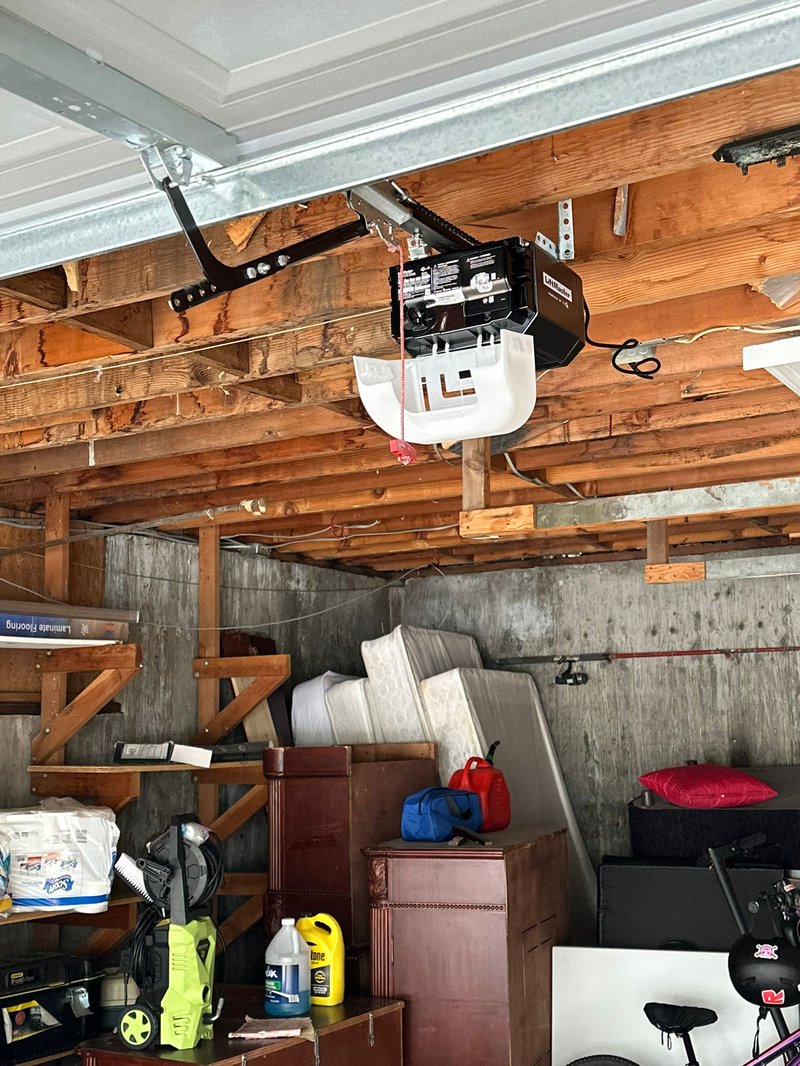
If you have been shopping for a new garage door opener lately, you have probably noticed that the product pages can feel overwhelming. Wi-Fi connectivity, camera integration, battery backup, ultra-quiet belt drives, myQ compatibility, motion-activated lighting, and vacation mode all compete for your attention and your budget. Some of these features will change how you interact with your home every single day. Others sound impressive in a spec sheet but rarely get used after the first week.
This guide is written specifically for homeowners in the Inland Empire, where summer temperatures routinely climb above 100 degrees, Santa Ana wind events stress hardware, and many neighborhoods are governed by HOAs with strict rules about visible equipment. What matters here is not always what matters in a cooler climate, and a feature ranking written for Seattle or Chicago may steer you wrong.
Battery Backup: Not Optional in Southern California
If you take away only one recommendation from this article, let it be this: buy an opener with battery backup. California law now requires battery backup on new opener installations in residential garages, so any unit sold and installed after July 2019 should include it. But the practical reason to want it goes beyond legal compliance.
Power outages in the Inland Empire tend to happen during extreme heat events, which are exactly the moments when you most need to get in and out of your garage quickly. A working battery backup unit will typically cycle the door 20 or more times on a single charge. That is enough to get your car out, return home, and still have power to spare. For households where the garage is the primary entry point, this feature is not a luxury.
When comparing units, look for a backup that recharges automatically from AC power and that gives you a clear low-battery indicator. Some economy models include a battery but do not alert you when it has degraded after several years. You want to know about a failing battery before a blackout, not during one.
Drive Type: Belt, Chain, or Screw
The drive mechanism is the feature that affects you every single day, because you hear and feel it every time the door moves.
- Chain drive: The most affordable option and the most common in older installations. Reliable and strong enough for heavy doors, but noisy. If your garage shares a wall with a bedroom, the vibration at 6 a.m. will matter.
- Belt drive: Uses a reinforced rubber belt instead of a metal chain. Noticeably quieter and produces less vibration. The right choice for attached garages where noise bleeds into living spaces. The price premium over chain drive is modest and worth it for most households.
- Screw drive: Fewer moving parts, but it can be sensitive to temperature extremes. In Inland Empire summers where a garage can reach 120 degrees, some screw-drive units have shown accelerated wear. Belt drive tends to hold up better across the full range of desert temperatures.
For most Riverside-area homeowners, a belt-drive unit is the best all-around choice when weighing noise, durability in heat, and cost.
Wi-Fi and Smart Home Integration
Wi-Fi connectivity lets you open, close, and monitor your garage door from your phone. At its most basic level, that means you can check whether you left the door open before you leave the neighborhood, and close it remotely without turning back. For households with teenagers or delivery services that need occasional access, it adds real convenience.
Before you pay extra for smart features, consider a few honest questions:
- Does your home Wi-Fi reach the garage reliably? Detached garages and stucco construction can create dead zones. A Wi-Fi extender can solve this, but it adds to the total cost and one more device to maintain.
- Do you actually use a smart home platform like Google Home, Amazon Alexa, or Apple HomeKit? If not, the integration value is zero. Buy the simpler unit.
- Does the manufacturer's app have a reasonable privacy policy and a track record of long-term support? Cheap openers with app connectivity sometimes see their cloud services shut down within a few years, leaving the smart features useless.
If the answers are yes, yes, and yes, smart connectivity is a worthwhile upgrade. If you are unsure, a basic belt-drive unit with battery backup will serve you well without the added complexity. You can always consult with a technician during opener installation to match the unit to your actual setup.
Horsepower and Door Weight
Motor power is one spec that homeowners frequently misread. Here is the straightforward version:
- 1/2 HP: Suitable for a standard single-car door made of steel or aluminum, typically up to about 300 pounds. This covers most tract-home single doors in the Inland Empire.
- 3/4 HP: The right choice for a two-car door or a heavier door made of solid wood or faux wood. Also a good pick if your door is old and does not glide as freely as it once did.
- 1+ HP: Primarily for oversized or commercial-style residential doors. Overkill for the vast majority of homes, but worth considering if you are installing a carriage-style wood door that weighs significantly more than a standard door.
An undersized motor works harder than it should on every cycle, which shortens its lifespan. Paying a little more for adequate horsepower upfront is less expensive than replacing a burned-out unit in five years. If you are unsure of your door's weight, a technician can assess it during a maintenance visit before you purchase an opener.
Safety Sensors and Auto-Reverse
All openers sold in the United States since 1993 are required to include auto-reverse and photoelectric safety sensors. These are not optional extras; they are the baseline. Do not let any seller present them as a selling point for a premium tier.
What you should verify is sensor quality and placement ease. Poorly designed sensor brackets make alignment a recurring frustration, especially in garages where things get bumped. Look for sensors with clear LED indicators so you can tell at a glance whether they are aligned. Misaligned sensors are one of the most common reasons a door refuses to close, and it is usually a five-minute fix once you understand what you are looking at.
Also check that the unit includes a manual release cord and that you know how to use it. In a power outage, you may need to disengage the opener and lift the door by hand. The door should be properly balanced by its springs to make that manageable for most adults. If it is not, that is a spring issue to address separately, not an opener issue.
Integrated Lighting and Motion Sensors
Most modern openers include built-in LED lighting that activates when the door moves. Higher-end units add motion-activated lighting so the garage illuminates when you walk in from the house side, even without operating the door. This is a genuinely useful safety feature for households where someone is often carrying items through a dark garage.
A few units also include a built-in camera. The camera quality varies widely, and the better solution for security-focused homeowners is usually a dedicated garage camera on a reliable platform rather than a camera bolted onto an opener as an afterthought.
Making the Final Decision
Here is a practical framework for choosing: start with battery backup (non-negotiable), then choose belt drive if any living space shares a wall or ceiling with the garage, then match horsepower to your actual door weight. Add Wi-Fi connectivity only if your garage has reliable wireless coverage and you will genuinely use it. Everything else is secondary.
Budget shoppers sometimes ask whether it is worth repairing an old opener rather than replacing it. If the unit is more than 10-12 years old and lacks battery backup, replacement almost always makes more financial sense than repair, because you are also getting modern safety features and a fresh warranty. If the opener is newer and the problem is a specific component, targeted repair is usually the better value. Use our cost calculator to get a quick estimate, or call (909) 264-7415 for a free on-site quote and an honest recommendation based on your specific situation.
If your door itself needs attention before or after an opener upgrade, routine professional maintenance can catch worn rollers, misaligned tracks, and spring fatigue before they become expensive emergencies.
Related services
When it is time to bring in a pro.